Open Sands Index™
Reclaiming
the shoreline.
An automated, data-driven index scoring beaches from 0-100 based on how accessible they are for independent visitors to set up their own chairs, free from commercial monopolization.
Read the Methodology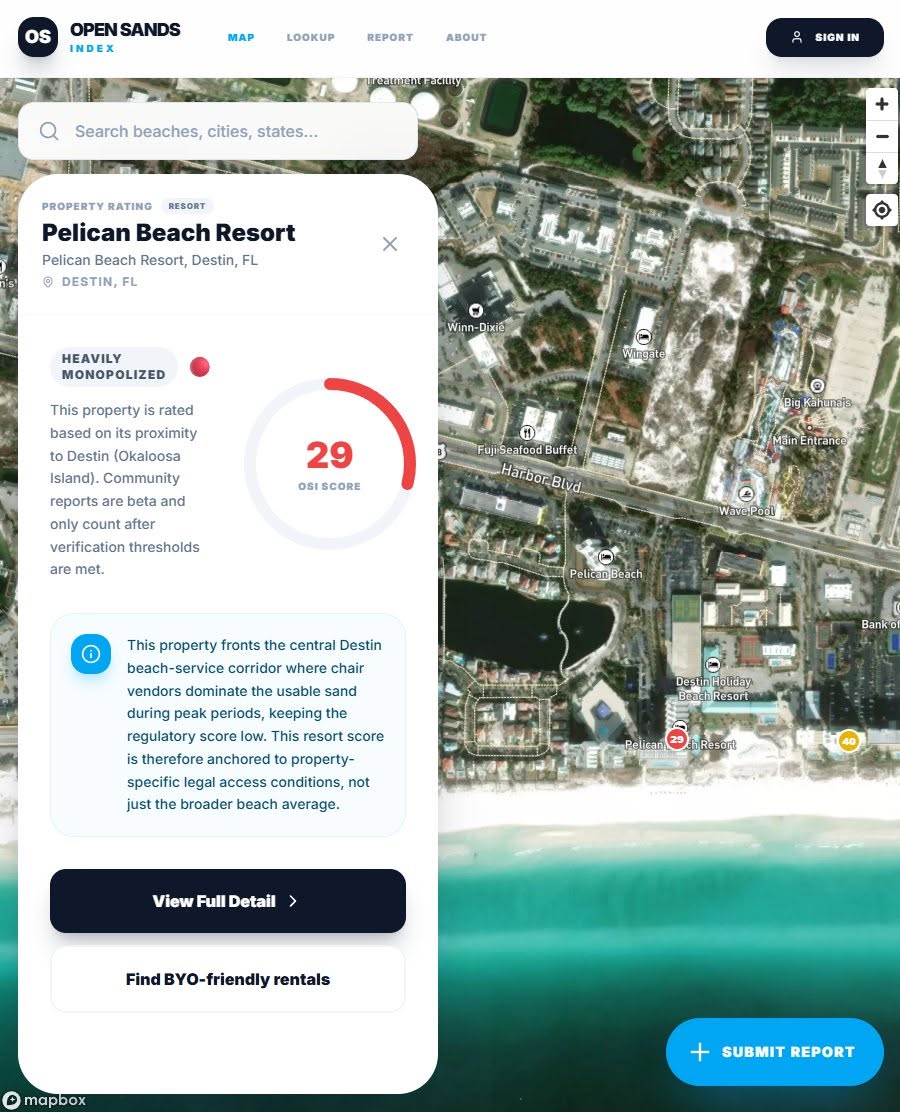
Open Sands Index™
An automated, data-driven index scoring beaches from 0-100 based on how accessible they are for independent visitors to set up their own chairs, free from commercial monopolization.
Read the Methodology
Across the coast, independent beachgoers are being squeezed out. Commercial vendors set up rows of empty, expensive chairs before sunrise, effectively privatizing the sand and forcing families to sit behind walls of umbrellas or face "trespassing" warnings.
We built the Open Sands Index™ (OSI) to fight back with data. It scores beaches from 0 to 100 based on how truly "open" they are, empowering visitors to vote with their wallets and choose destinations that respect public access.
Score: 0 - 39
Vendor density high. Pre-setting allowed. Low open space.
The score isn't an opinion. We run a weekly data pipeline using Google Earth Engine to pull high-resolution multispectral imagery.
We then pass these images through a specialized computer vision model to detect commercial rows of umbrellas, calculating the exact percentage of sand monopolized.
Geospatial Score (G_i)
30% total index weight
A beach's Open Sands Score isn't guess work. It's a composite of visual evidence, crowd reports, natural language processing, and local ordinances.
Computer vision detection of umbrella grids and beach coverage taken from recent orbits.
An LLM filters hundreds of Google Reviews to detect complaints about "access," "chairs," and "private sections."
Does the municipality legally ban vendors from claiming space before a renter arrives? We check the laws.
Verified citizen reports and geo-tagged photos adjust the rolling 30-day index in real-time.
The best way to change vendor behavior and convince town councils to protect public access is to spend tourism dollars where the beach is free.